 1300 138 591
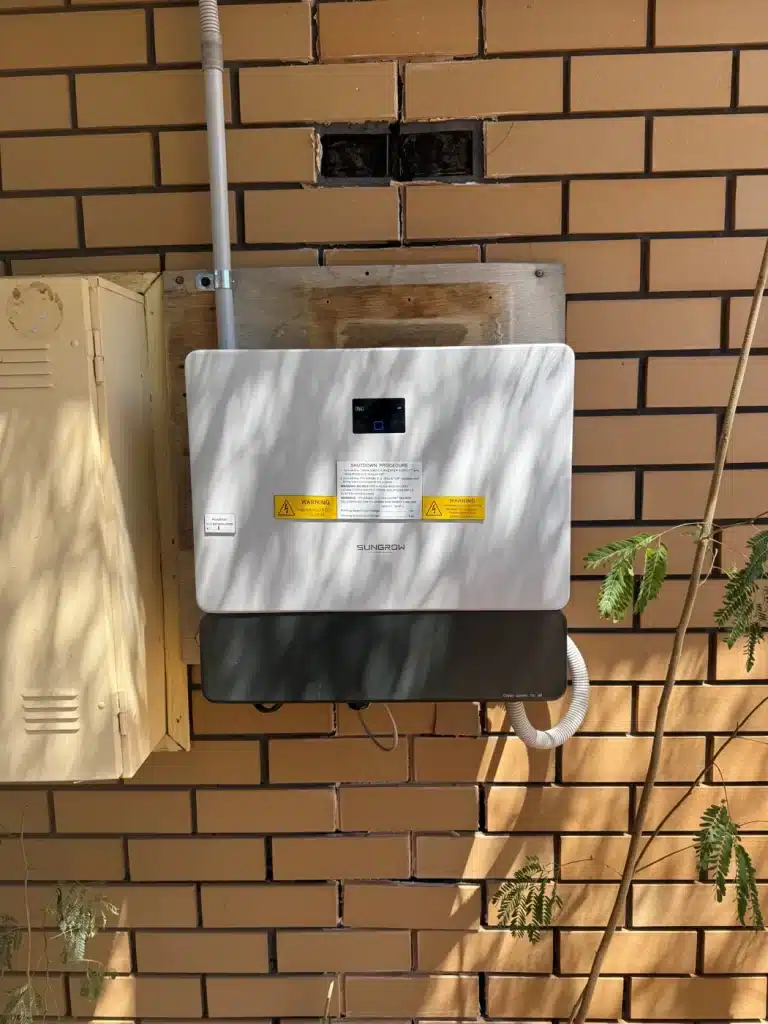
The short answer: solar panels make DC electricity, your house runs on AC, and the inverter is the translator in between. It is also the part most likely to need replacing before the panels do, often after somewhere around 10 to 15 years.
What does the inverter actually do?
Four jobs, all at once:
- Converts DC to AC so your appliances can use the power.
- Finds the sweet spot for your panels (it is called maximum power point tracking, and it is cleverer than it sounds).
- Syncs with the grid so your power matches the grid’s voltage and timing.
- Shuts down safely if something goes wrong, including when the grid goes down.
Why does solar switch off in a blackout?
Because it has to. A standard grid-connected inverter shuts down when the grid fails, so it doesn’t push power back into lines that crews might be working on. It is a safety rule, not a fault. Some systems with a battery and a backup-capable inverter can keep selected circuits running. Our storm season guide explains the difference.
The three main types
- String inverter: one box handles a whole string of panels. Simple, common, usually the cheapest.
- Microinverters or optimisers: each panel gets its own little converter or optimiser. Handy with shade or split roofs.
- Hybrid inverter: handles solar and a battery in one unit, which can make adding storage easier.
If you think you’ll want a battery down the track, ask about a hybrid or battery-ready inverter now. It can save double handling later.
What does a replacement cost?
Rough ballpark for a standard home string inverter is somewhere around $1,500 to $3,500 installed. Hybrid and three-phase units cost more. Prices vary with brand, size and install complexity, so treat that as a guide and not a quote.
Signs your inverter is unhappy
- Fault codes or red lights
- Zero output on a sunny day
- A monitoring app that has gone quiet
- Odd noises or a unit that is very hot to the touch
Your monitoring app is the canary. Check it now and then, because a dead inverter can go unnoticed for weeks and cost you free power.
Keeping it alive longer
Heat is the enemy. Inverters installed on a hot afternoon wall have a tougher life than ones in shade. Ask where yours will go, and check the warranty length too, which commonly runs from five to ten years depending on the brand.
Does this change by state?
The tech doesn’t. The rules around inverter size and export limits do, because each network (such as Energex and Ergon in Queensland, Western Power in WA, TasNetworks in Tasmania and the NSW networks) sets its own limits. A good installer knows yours.
General information only, current at November 2026. Prices, rebates and tariffs change, so check current terms before you buy.
Want a straight answer for your place?
Book a free Energy Assessment. We start with a call, come out to your place if it suits, look over your power bill and any existing solar, and give you a recommendation that fits. No pressure, no sales theatre.
Book a free Energy AssessmentPrefer to talk? Call 1300 138 591